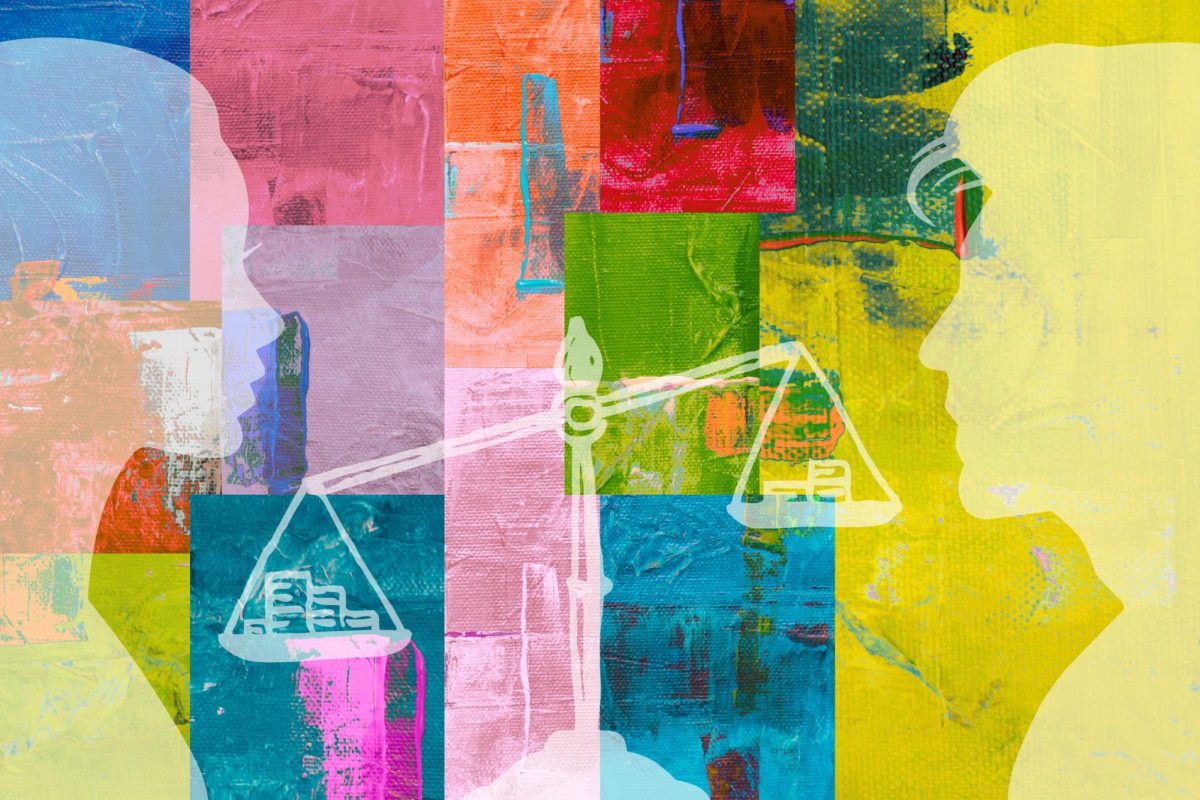
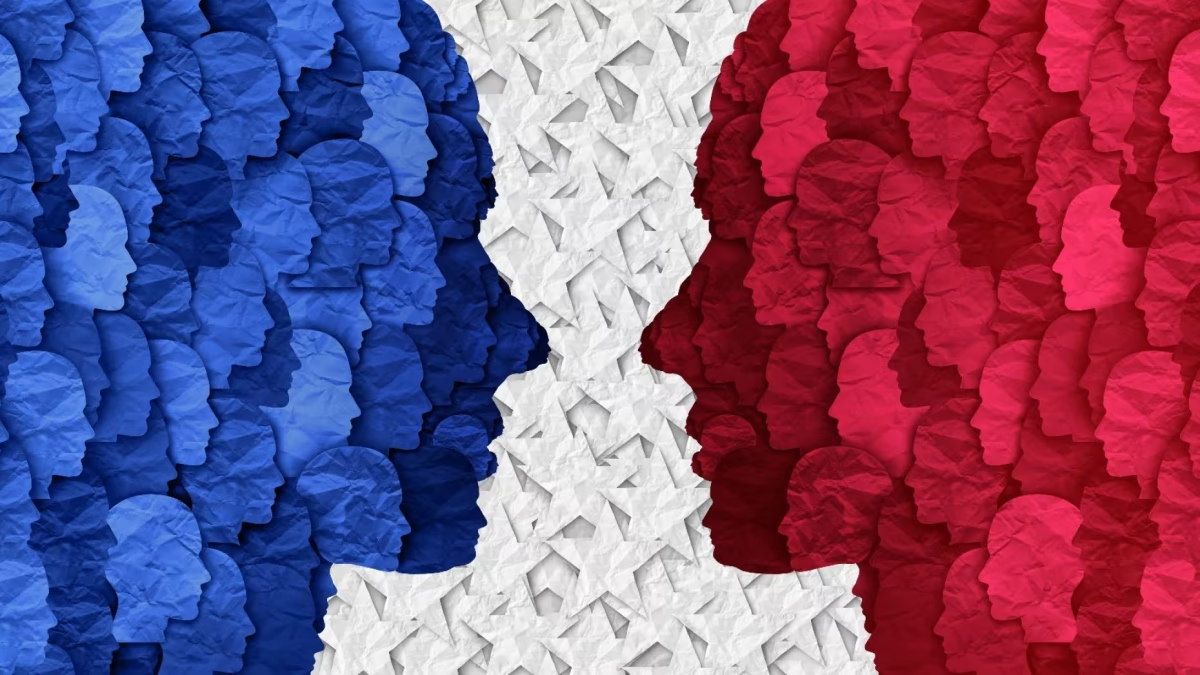
Polarization is old news. People across the US and the world have been getting more and more opposed for about 50 years. Why should we care? Considering other vital global trends, there is more at play here than meets the eye. Populist leaders have risen to power in many nations, and populism itself is spreading rapidly. Uncertainty is growing, especially online, where practically anything could be false. Additionally, more people than ever are consuming huge quantities of media. Considering, as well, the rate at which content is viewed using Tiktok and other short video platforms, media consumption is immense.
It may be tempting to label polarization and growing uncertainty distinct products of the times; however, these two are highly linked. In order to ease political tensions as new threats pressure the world, understanding and combatting uncertainty is key.
First, why is uncertainty causing us to polarize? Biologically, the answer lies in our fear of the unknown. In the 2016 study Computations of uncertainty mediate acute stress responses in humans, researchers showed that the most stressful situations for humans occur when the most uncertainty is involved. Specifically, they showed that individuals exhibit the most stress when there is a 50% chance they get shocked with electricity as opposed to both a 0% chance and a 100% chance, i.e. uncertainty about an outcome is more stressful than the full potential negative outcome.
This reveals a lot when concerning the uncertainty that individuals are exposed to every day. When on social media for example, it is easy to quickly dismiss news or perspectives that don’t align with our own specifically because they make us more stressed. Especially as individuals must navigate thousands of independent sources and pieces of information with modern media, uncertainty and the biological stress associated are very widespread. Many social media services make it very easy for individuals to curate their media towards complete agreement where there is little worry of uncertainty. Social media specifically implements its own personalization algorithms, which aid in providing content that perfectly fits these subconscious, visceral preferences. All of these give rise to subcultures existing distinctly within the format of social media.
Even further, these groups propagate us-them dynamics where populations self-segregate, similar to other mammals in large groups. Adding to the stress of uncertainty, different groups also elicit stress responses from individuals. Groups of similar individuals additionally provide a comforting environment that causes dopamine release. With these biological barriers, it is no wonder rigid groupings persist. Furthermore, given the immensity of uncertainty and social media platforms’ readiness to isolate, it’s understandable why polarization has spread quickly across novel communications platforms and has become a global phenomenon as a result.
Rampant and growing uncertainty in modern media fuels polarization on an unprecedented scale, but why does this matter?
Polarization prevents progress. Colored by “the assertion of immutable positions and the assumption of bad faith by the other side,” polarized individuals are unlikely to cooperate. This matters both in government where gridlock effectively hamstrings legislative effectiveness and on the local and interpersonal level where political identity is reshaping social identity and widely contributing to isolation and animosity between individuals.
Then, how can we fix it?
Some believe the solution lies in resolving political structures that help party extremes get elected, amplifying differences. Others believe the key is fostering beneficial conversations at the individual level. These approaches certainly hold merit for addressing the impacts of polarization in these respective areas; however, each overlooks the driving forces that have led the advent of polarization: online communication services, social media platforms, and widespread societal uncertainty.
Polarization noticeably began in the US in the 1970s, largely in the depth of the Cold War, a powerful force of uncertainty and fear in the US. As tensions lessened, the first online communication platforms started gaining mainstream attention. Since then, social media platforms have taken the US and other countries by storm where now around 93% of the US uses social media.
Right now, the storm of uncertainty that is our current online world works only to fuel our biological inhibitions and render us helpless when we need to collaborate most. So what we need to do is revise our relationship with media, but what does that look like?
Two major paths forward seem feasible. The first is regulation of social media giants. Their algorithms have been designed in large part to utilize our biological pathways to keep us using their apps; however, they don’t have to be structured like that. In the same way that algorithms currently produce a curated stream of content, constructing a façade that separates us into artificial groups, they may also be tools for learning and trust building. While the process of eliminating uncertainty on social media platforms poses an immense fact-checking challenge, this does present a viable path forward with credible government action.
The second path is likely self-evident. Stop using social media. Of course, it isn’t so simple, and undeniably, there are some benefits to the global communication platform that social media has established. From collective action to citizen journalism and even niche interests, social media is a medium for good in some ways, though of course, with drawbacks even in these areas. However, the few benefits social media does offer do not outweigh the drastic effects of its current unrestrained use, and if necessary, outright banning of social media would begin to heal the rifts it causes.
It is clear that social media drives the stress that forms and fortifies polarized groups. To combat polarization and its myriad impacts on governments, individuals, and our interpersonal interactions, reducing collective exposure to social media is paramount. Regulation and elimination of social media both serve as possible paths forward. While neither is perfect, both plans are viable ways we can take action now against polarization and animosity.