

-
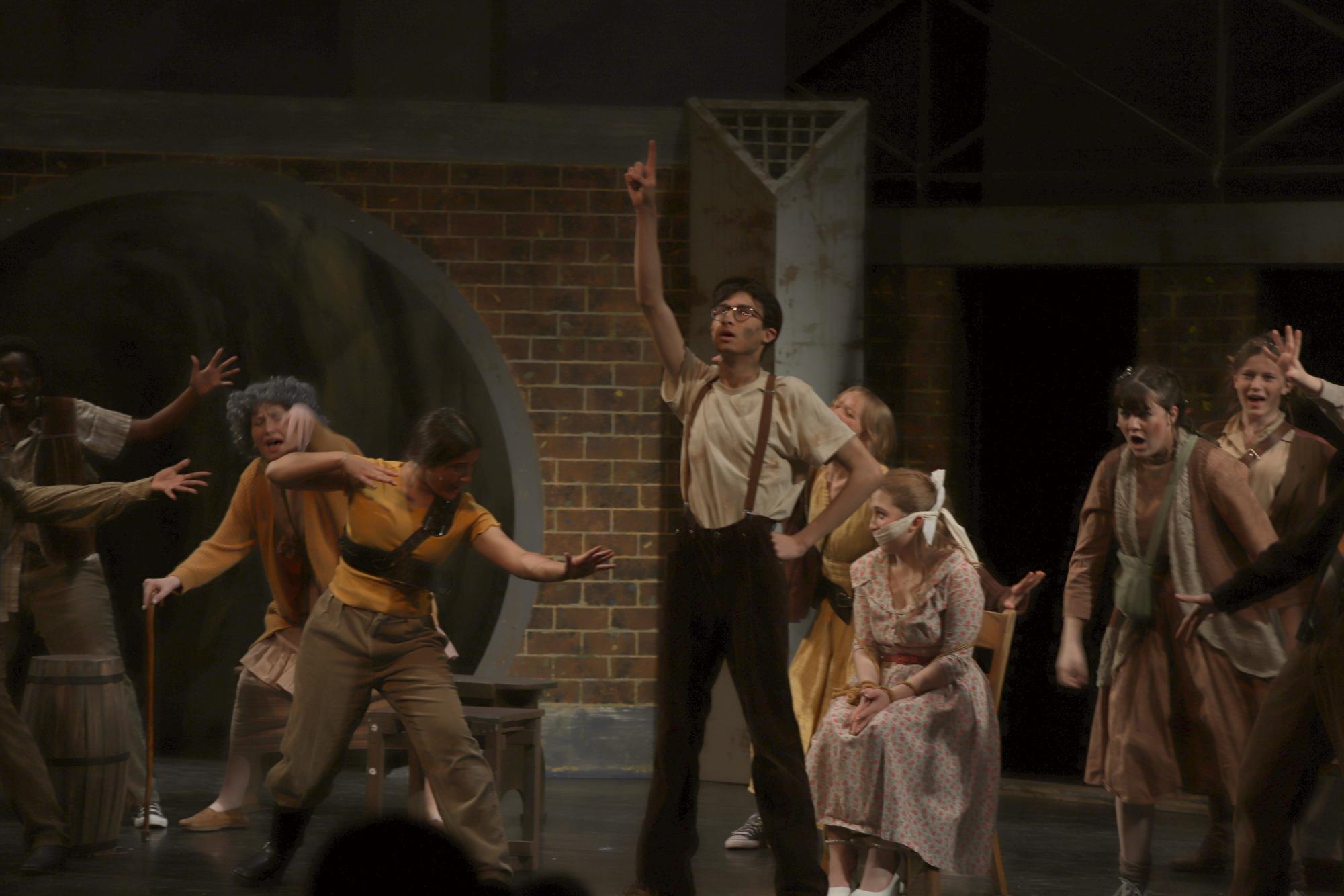
The Poor of Urinetown dance around Hope Cladwell (Kadiah ’26) in their hideout trying to decide whether or not to kill her for her father’s crimes

-
Hope Cladwell, Caldwell B. Caldwell’s daughter, held hostage to keep the rebelling Poor of Urinetown from being attacked by the UGC, her father’s company

-
Hope, daughter of the tyrannic leader of the UGC, cowering from the Poor of Urinetown as they dance in “Snuff That Girl”

-
Bobby (Zach B ‘26) and Josephine Strong (Abby D ‘28) rally the Poor of Urinetown against the Urine Good Company, as it tries to impose even higher fees to be able to use a toilet

-
-
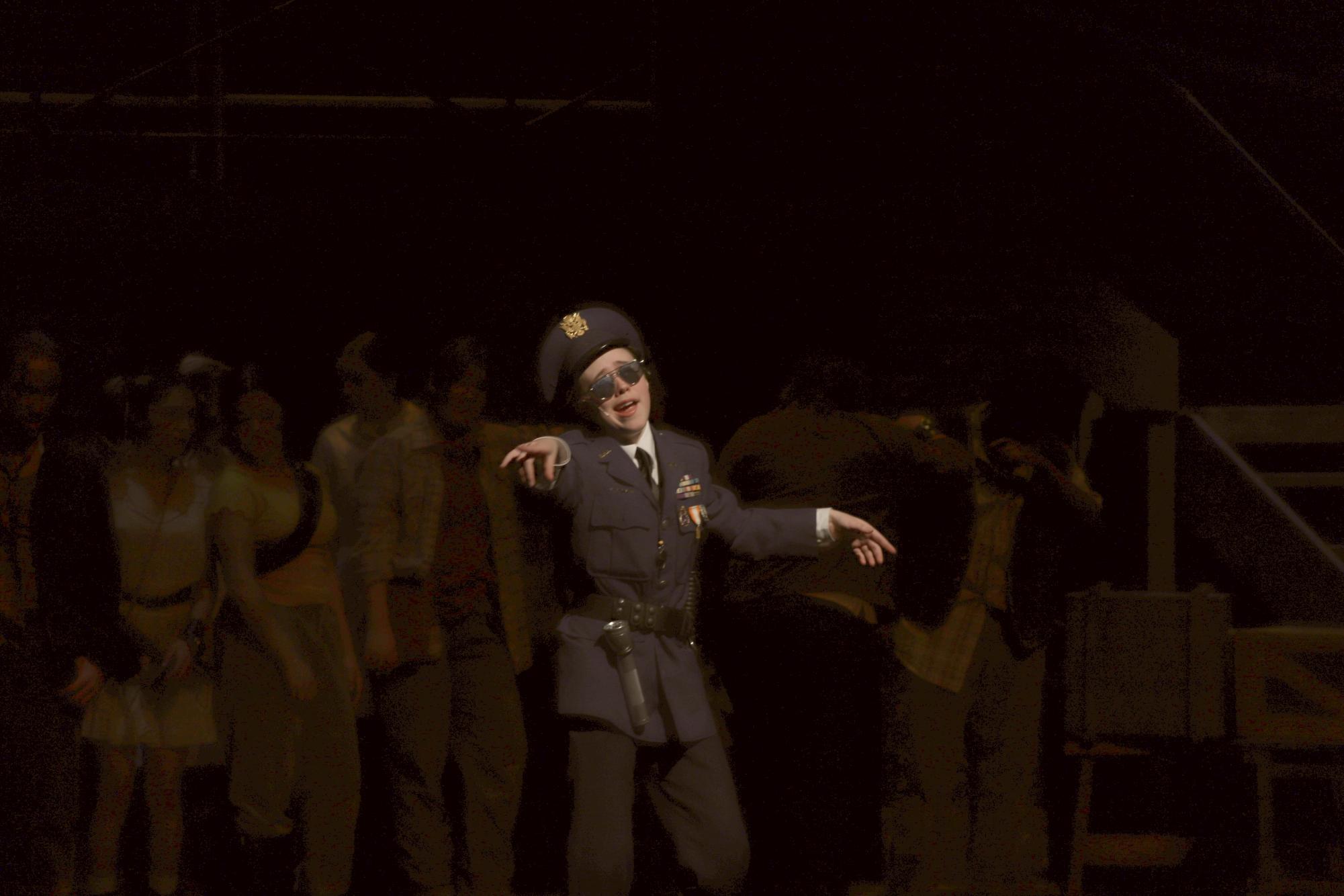
Officer Lockstock (L ‘28) holds back Little Sally (Aaliyah ‘27) as she tries to escape him and his threats about the Poor of Urinetowns’ fate

-
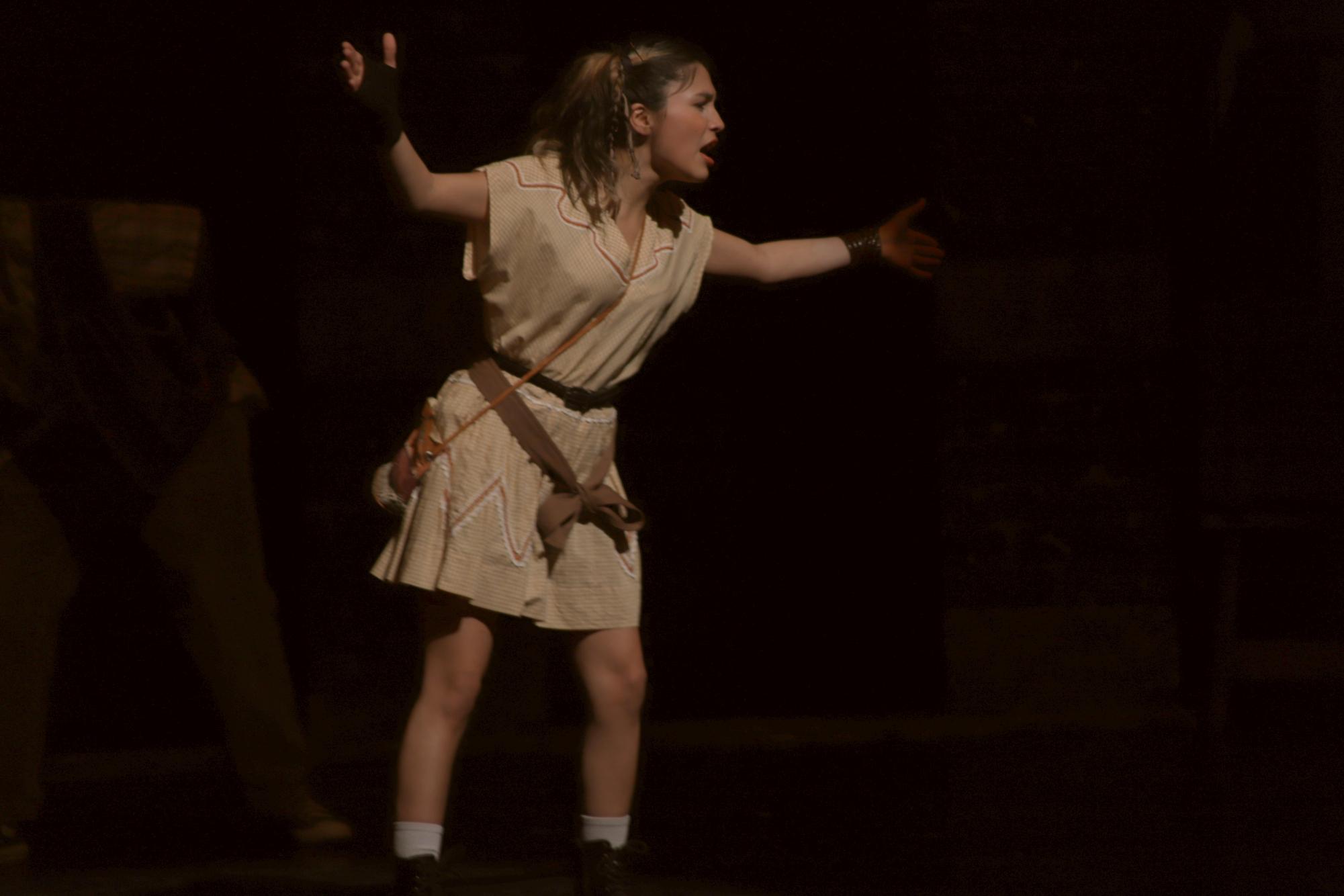
Little Sally calls for the rest of the Poor of Urinetown about sparing Hope Cladwell’s life, as harming her would make them no better than the despised UGC
-
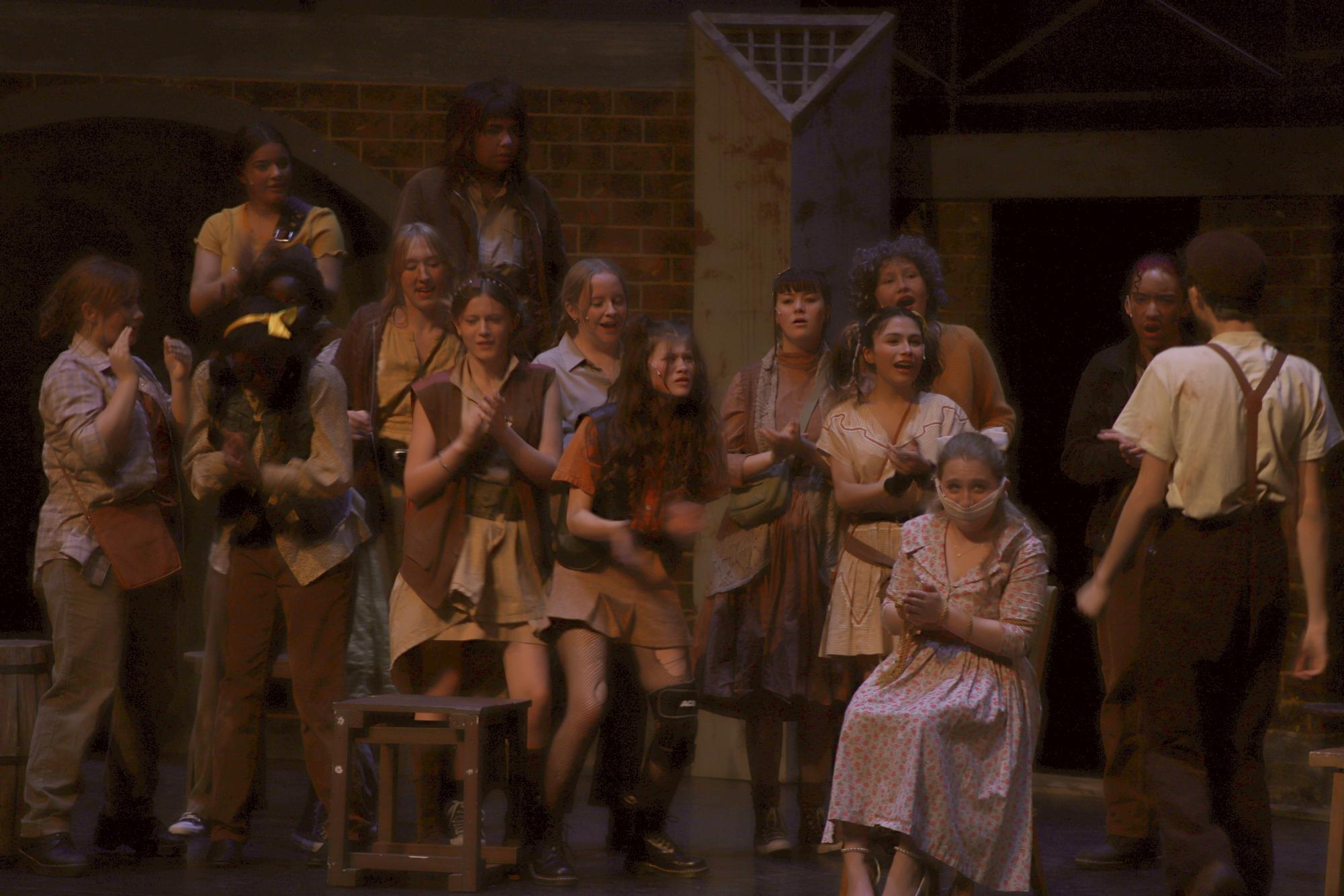
Bobby Strong stops the Poor of Urinetown from killing Hope in retribution for her father’s and the Urine Good Company’s actions
-
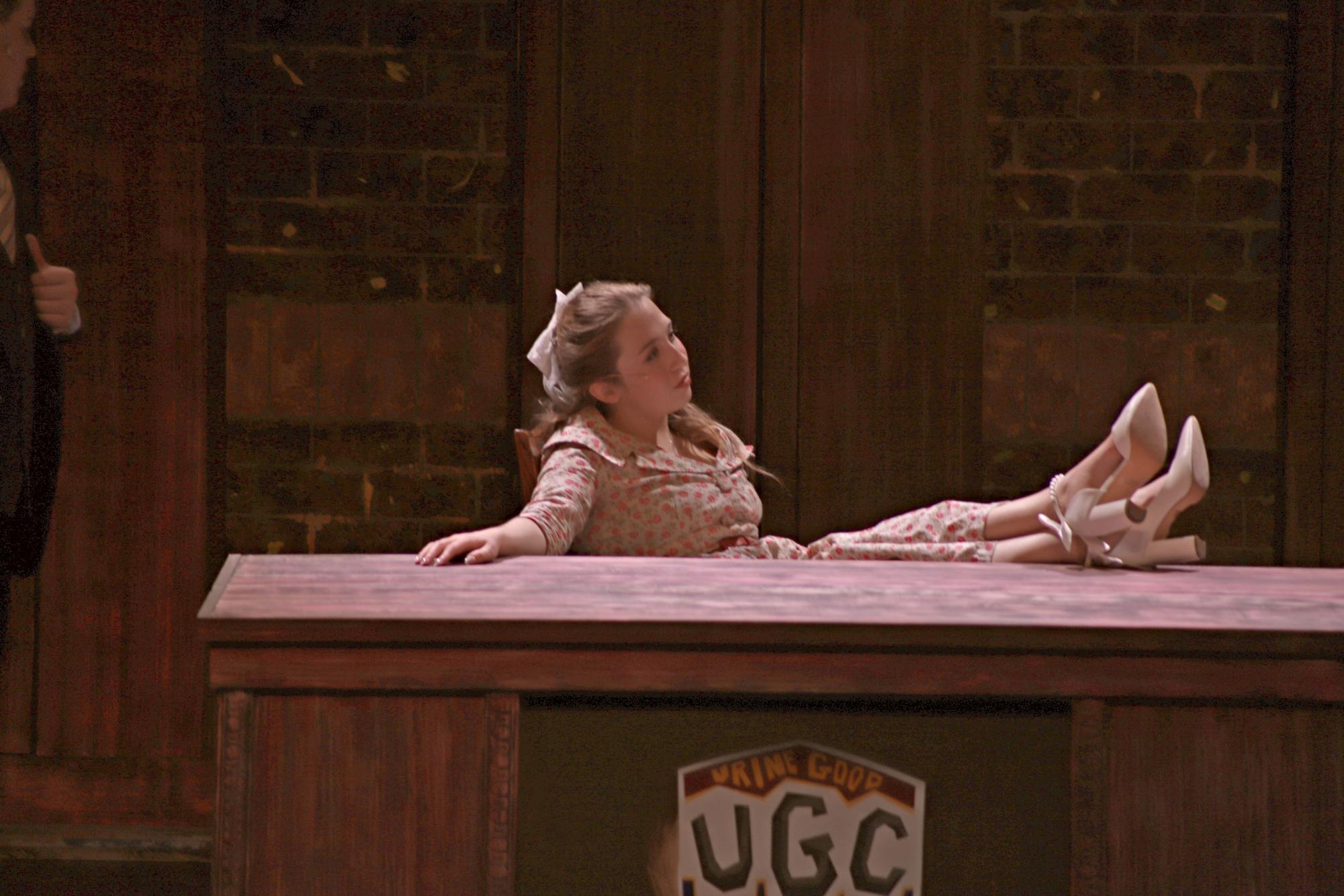
Hope confronts her father Caldwell B. Cladwell (Diego C ’26) about his monopolization of the public amenities, and the unfair and overly harsh fees he imposes on the Poor of Urinetown
-
Bobby Strong passionately sings “Run, Freedom, Run” to convince the Poor of Urinetown to revolt against the tyrannical Urine Good Company after they raised the prices of the public amenities
-
The cast of Urinetown bows dramatically at the end of their performance to a well-deserved standing ovation

This year’s musical, Urinetown, sounds anything but glamorous. You might be wondering, there’s no way someone wrote a musical about pee, right? Wrong. While the premise may seem unappetizing at first, the show’s satirical humor, parallels to real world issues, and catchy musical numbers made it one of my favorites.
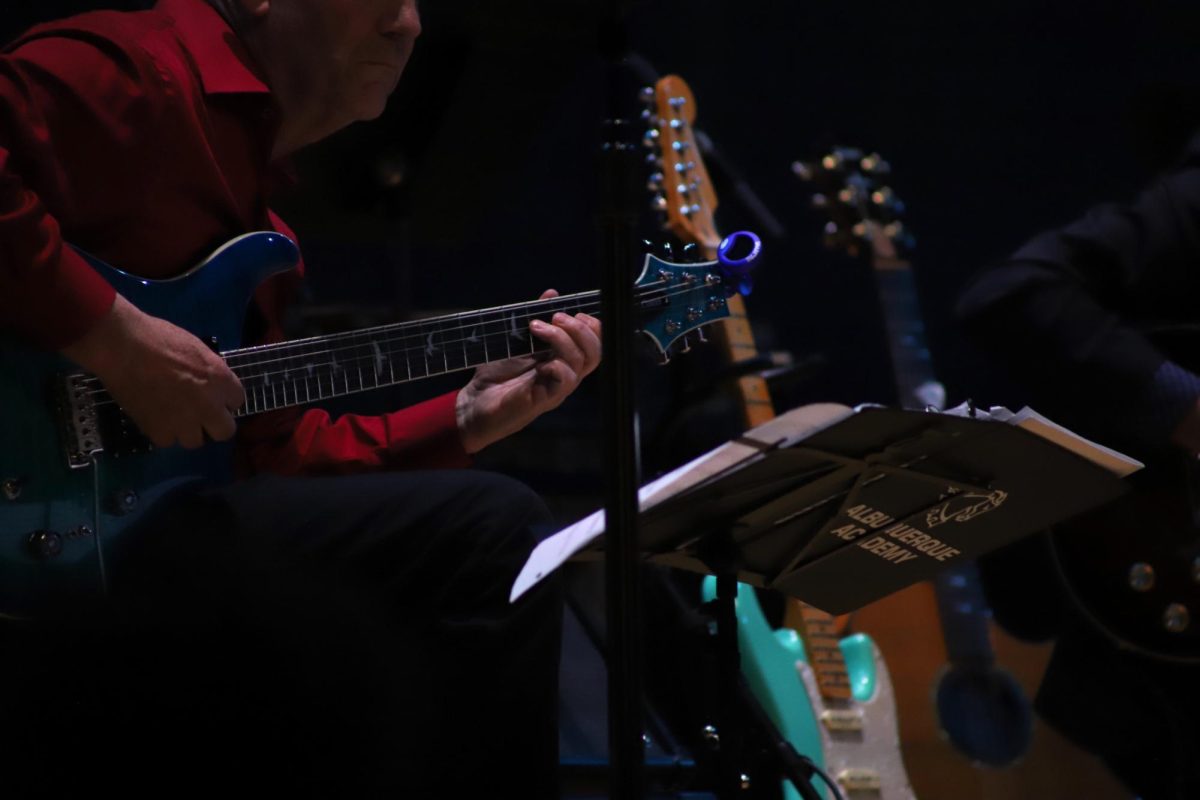
Urinetown, directed by Desiree Lang, opens with music performed by the production’s live orchestra, immediately bringing the show to life. We are then introduced to the show’s witty narrator, Officer Lockstock, played by L ‘28, who guides us through the story with hilarious and self-aware commentary. Alongside him is Little Sally, played by Aaliyah ‘27, a curious girl who questions Lockstock and the logic of the play itself. I quickly found her endearing and a small but pivotal character in the show.
The first act displays “Public Amenity #9,” where citizens line up outside a public toilet, anxiously waiting for their turn and counting their change. The musical is set in a town suffering from a 20 year drought, where a corrupt corporation, Urine Good Company (UGC), controls all access to bathrooms. He forces citizens to pay to pee or be sent to the mysterious “Urinetown.” As people begin to feel desperate, we meet the protagonist, Bobby Strong, played by Zachary ‘26, who begs his jaded boss, Ms. Pennywise (Nandana ‘28) to allow his father access to the toilet. She refuses, launching into the show’s first solo.
When Bobby’s father finally relieves himself illegally, he is arrested by Lockstock and Officer Barrel (Monica ‘26) and sent to the real “Urinetown,” a place that, as the show implies (and reveals in the end) is synonymous with death. Soon after, we meet the rest of the cast, and are introduced to the contrasting world of UGC’s corporate executives, who quickly became my favorite characters. Mr. Gladwell, played by Diego ‘26, is the greedy and cruel head of the company. He believes in his mission, to “keep the pee off the street, and the water in the ground.” His strong characterization and powerful stage presence made his performance especially memorable.
The intersection of both worlds is embodied by Hope Gladwell, Mr. Gladwell’s daughter (Kadiah ’26). She quickly falls in love with Bobby (Zach ’26), in an endearing musical number called “Follow Your Heart,” with Zach’s and Kadiah’s voices blended perfectly together. She is torn between wanting to support Bobby in his revolution against Mr. Gladwell, while also wanting to listen to her father. Following the number is a hopeful solo, as Bobby stands up for people’s right to pee and leads the town in a revolution.
The story continues, going on to one of my favorite musical numbers “Run, Freedom, Run.” Bobby and Hope reach a point of conflict as Bobby captures her as leverage against her father. It ends with Bobby getting arrested and sent to Urinetown in the saddest part of the whole production. In the end, we find out some surprising details about Hope’s family, and Hope decides to lead the revolution, fighting against her father. Sounds like a happy ending right? Not quite.
The show wasn’t just satirical and hilarious, it was also aesthetically beautiful. The large thoughtfully painted stage sets, with ladders and stairs leading up to the second level, added so much to the performance. But it wouldn’t be special without the show’s unique lighting. It starts off relatively normal, but transitions into lighting sequences, including a brief moment of the cops using their flashlights in their dance number. Not to mention, the costumes, designed by Lilah ‘27, Carsen ‘28, and Mercy ‘28, each of which complimented the characters. Just watching the actors portray such fun characters made it clear that they were having fun performing. Overall, congratulations to everyone who put on this wonderful production, one that despite its humor and light energy reminds us at the end: “This isn’t a happy musical.”






Uzair Hammad • Mar 20, 2026 at 8:29 am
Thanks for this great review. I often passed by the poster next to the backstage door to Simms that publicized our first production of Urinetown — around the early 2000s if memory serves — and wondered what the heck it was about. This piece definitely piqued my interest and I’m sad to have missed this recent rendition.