
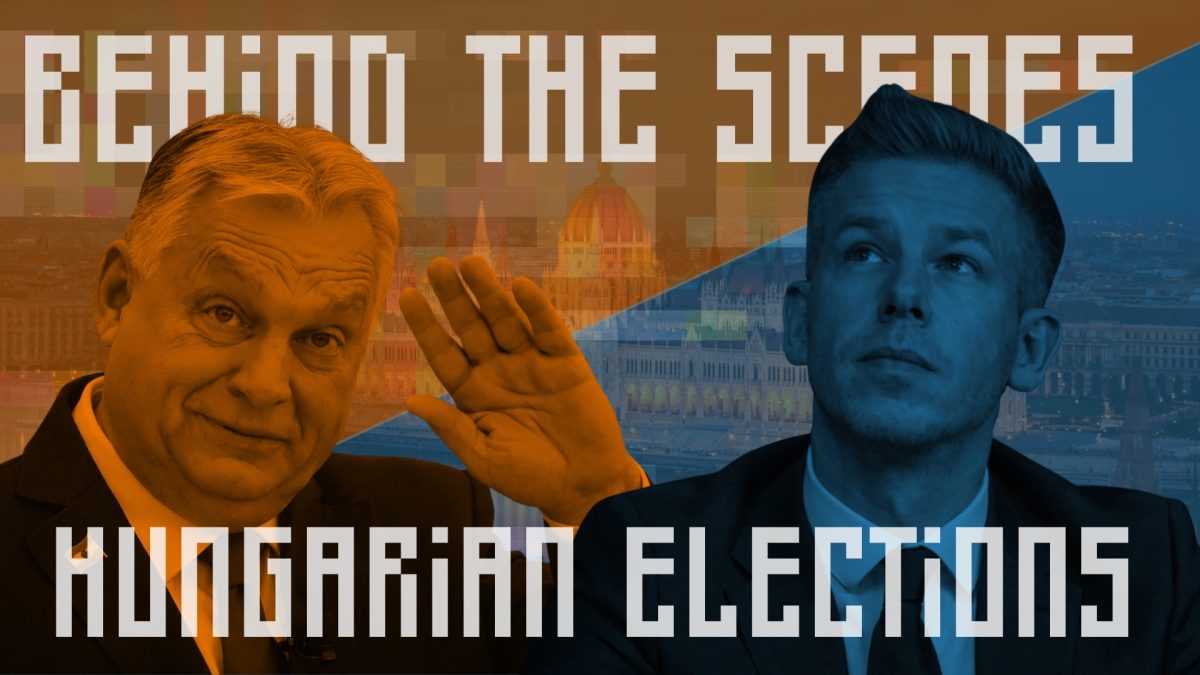
Hungary will hold parliamentary elections on April 12, 2026. For many Hungarians, this means that our tax forints (Hungarian national currency) will be thrown away on propaganda and that inflation will keep rising for years to come because of the deficit spending that comes with campaigning. With the countdown to April 12 already underway and candidate nominations just around the corner in Hungary, this article will look at the “revolutionary” campaign tactics of the nationalist Fidesz ruling party and why those tactics will “revolutionarily” not deliver the two-thirds parliamentary majority the party so desperately wants. The writer of this article advises readers to note its critical tone and to do their own research on the matter. Behind the ink and the pen is not a political analyst but a frustrated Hungarian citizen who has had enough of the political tension tearing the country apart.
Viktor Orbán’s ruling Fidesz party, in power since 2010, faces its most serious challenge in years from Péter Magyar’s opposition Tisza party. So much so that international news outlets have finally “discovered” the small Central European nation in a new light. Until now, it has mostly been framed as a source of national scandals, a country that refuses to work in unison with the rest of the EU, or a Trump-and-Putin butt-dial state landlocked in the middle of an otherwise thriving post-communist Europe. Now, attention has shifted to the election.
Yet, as the race for a parliamentary majority tightens, it’s not only international journalists suddenly zeroing in on Hungary’s elections—billboards are, too, which have graciously retired from advertising protein-rich dairy products to dedicate themselves fully to propaganda slogans, carefully packaged fear, and just the right, tasteful sprinkle of hatred aimed at the opposition.
All in all, Fidesz has leaned into a set of tactics that will predictably not win them the election in April but will nevertheless be a great way to spend money that could have gone to healthcare and education. Thrilling, right? Let’s get into it.
While preparing for national elections, many campaign planners might consider it useful to focus the public’s attention on domestic issues. Fidesz, however, has correctly recognized that this is an utter waste of stolen, corrupted Hungarian forints. This is partly because the Hungarian forint is so strong on an international scale that my comfortable upper-middle-class status could buy me a nice tent on the streets of Los Angeles. Corruption is so widely accepted that “C for corruption” has replaced “A for apple” in the alphabet, and the second government-scale pedophile case in two years has sparked multiple waves of protests in the capital, Budapest. Overall, it would be far too complicated to reconcile real national issues in the fight for parliamentary seats—yet you still need to maintain an above-average paycheck as the prime minister of the EU’s poorest country. So, naturally, you instill fear through propaganda by internationalizing Hungarian elections. That means focusing on the most “immediate” threat to Hungary and, apparently, solving world peace.
War and peace divide Europe as Ukraine and Russia enter their fourth year of war. According to the message Hungarians keep hearing, Hungary is the next place the war will spread—like a wildfire crossing borders—until it reaches even me at the dinner table while I’m eating Hungarian goulash on an ordinary evening. This apocalyptic scenario is far from reality, but many Hungarians believe it, as this is exactly the prophecy Hungarian propaganda has been feeding voters for the past three years.
To win over voters, Orbán’s central pitch is that only Fidesz can keep Hungary out of the Russia–Ukraine war, while opponents—by aligning with the EU—would pull the country toward conflict. To demonstrate, I’ve included my favorite campaign tool to date: a billboard that reminds Hungarians every single day that while a carton of eggs has reached ridiculous prices, you can still plaster eggs across gigantic posters—while also protesting support for the war in Ukraine. And while I might be overthinking the secondary motive behind this design, the primary motive—“peace politics,” as Fidesz likes to call it—still stands.
The billboard shows two men as cartoon figures hatching out of cracked eggs in a nest. Both are wearing dark suits with white shirts and blue ties—so identical you’d assume they coordinated outfits before their big photoshoot. If Zelenskyy’s acting career wasn’t enough to make him recognizable, his role as Ukraine’s wartime leader certainly should be, which makes the figure on the left easy to identify. On the right—slightly harder to place, and fair enough, since he hasn’t had the same successful acting career—is the opposition leader Péter Magyar.
Above these two very handsome men, in huge white letters, the Hungarian text reads: “MINT KÉT TOJÁS”, which translates to “Like two eggs”—Orbán’s cleverly chosen version of “like two peas in a pod,” meaning the two figures are basically nestmates.

I have to admit: this comparison is a sly use of association branding—the mental link people form between a “brand” and certain concepts, which then shapes how that brand is understood. Here, Zelenskyy is being packaged with the “brand” of war, and that brand is then glued directly onto the opposition. This is where Fidesz swoops in. Now imagine Orbán breaking the fourth wall like it’s a movie and asking, dramatically: Do you want war, or do you want peace? And if you don’t want to die under Russian missiles and drones, then you must vote Fidesz.
While the “war vs. peace” narrative is clearly designed for Hungary’s reliably aging electorate, even this country still manages to produce a few young people now and then. And with the 2008 age group reaching the ripe old age of 18—the divine threshold at which one may finally indulge in the holy trinity of adulthood: alcohol, voting, and the existential dread that comes from planning your escape from Hungary right after high school—Fidesz has correctly recognized that these fresh voters must also be targeted in the April elections too.
And nothing says “welcome to democracy” quite like signing up for Fight Club. “Harcosok Klubja”—literally “Fight Club”—is the name given to the pro-government online activist network tied to Fidesz’s digital campaign strategy. With the stated aim of recruiting 100,000 digital foot soldiers to cheerlead for Fidesz across the internet, the initiative operates as an exclusive, invite-only project. Its purpose is simple: counter the social media presence of opposition parties, especially the Tisza Party.
“The first rule of the club: not a word to anyone about the club. The second rule of the club: not a damn word about the club.” In this particular case, those rules are probably reasonable—because, in my personal view, the social embarrassment of being publicly identified as a Fidesz Fight Club member may well outweigh the reward of fifteen minutes of online fame.
As Orbán himself put it in one speech: “The world has changed, and with it politics have changed as well. New spaces have opened up: politics have entered the online, the digital world. […] We must innovate; we must move in, we must step up into the virtual space as well.” Another “virtual space” he seems to have entered during the campaign season is the gym. I’ll spare my American readers any extended commentary on such an uncensored thought, but I have included an image of Hungary’s prime minister and Trump below—if only to highlight the striking dietary parallels between America and Hungary.

Overall, I’m not sure how much these “revolutionary” campaign tactics—and the many others I haven’t even covered—have actually paid off, because the opposition is currently said to be leading in the polls, with some surveys even suggesting that Tisza has around a 70% chance of winning.
But one thing is certain: billboard spending and the rest of this campaign spectacle are financed from the Hungarian treasury, swelling the deficit and, in turn, fueling inflation. Still, if nothing else, it guarantees that I’ll have a front-row seat to a political soap opera come April—and I hope you, dear reader, will join me for the comedy as well.