
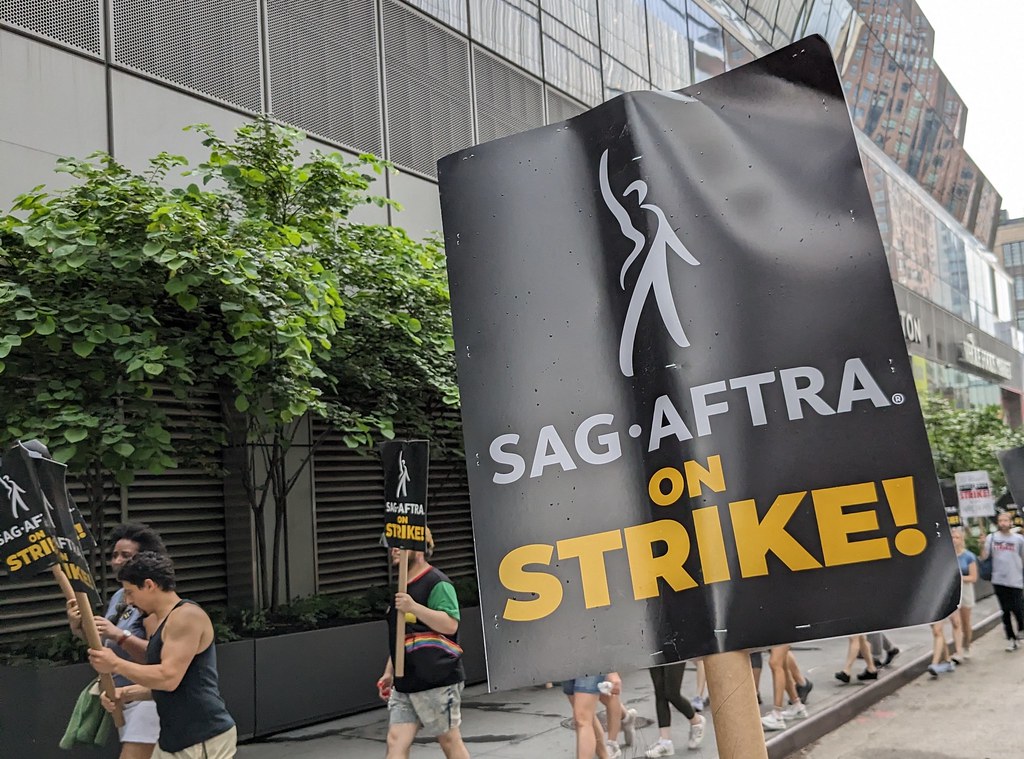
A few years ago, I remember feeling completely sidelined when it came to my acting career. It was like the world of acting had come to a screeching halt, and for months, my inbox stayed silent. I kept thinking, Maybe my agent just forgot about me, or worse, doesn’t like me. Every day, I would check my email, hoping for an audition or a callback, but nothing came. It wasn’t until my parents explained to me what was truly happening in the film and television world that I understood. What was happening to me wasn’t personal, but rather something affecting everyone. I finally realized my agent wasn’t ignoring me; it was just the industry, frozen in time due to the SAG-AFTRA and WGA strikes occurring at the time. At the time, I didn’t understand why people were striking. To me, it was just an inconvenience, and nothing more. However, after looking into the strikes, I began to see just how important it was to the people the film and television industries rely on.
The SAG-AFTRA (Screen Actors’ Guild) and WGA (Writers Guild of America) strikes of 2023 were major labor actions taken by writers and actors across the country who argued that the entertainment industry had changed negatively due to streaming and AI usage, while worker protections and pay had not kept up. The strike created Hollywood’s first industrywide shutdown in more than 60 years, and exposed deep tensions caused by changes in how movies and television are made and distributed. Members of the WGA went on strike first, wanting higher minimum pay, better residuals from streaming services, and protections against the use of artificial intelligence to replace or undercut writers’ work. Shortly after, SAG-AFTRA, the union representing film and television actors, joined the strike with similar motives, including low residual payments from streaming, the shrinking number of paid acting jobs available, and the fear that studios could use AI to digitally replicate actors’ voices or likenesses without compensation or consent.
The New York Times cites SAG president Fran Drescher in an article concerning the strike. She noted that “the entire business model has been changed” when she announced the strike. She went on to state that “This is a moment in history — a moment of truth. At some point, you have to say, ‘No, we’re not going to take this anymore.’” These sentiments largely echoed how writers and actors were feeling at the time. After months of striking, SAG-AFTRA reached an agreement, which included increases in compensation for streaming, better health care funding, and promises that AI would not be used to digitally replicate actors without consent or compensation. However, a NYT article highlights the fact that the union “failed to receive a percentage of streaming service revenue”, which was originally one of the larger goals of the strike. “It had proposed a 2 percent share – later dropped to 1 percent, before a pivot to a per-subscriber fee.” Overall, the strikes not only highlighted, but resolved many growing tensions between labor and corporate power in modern entertainment.
During the strike, the industry itself came to a near standstill. Tons of large films and television shows stopped producing, and hundreds of products were halted. Due to this, the time during the SAG and WGA strikes was difficult for many actors. Alexis Scott, an Albuquerque Academy drama teacher and SAG eligible actor, expressed her experience during the time. She states that; “A lot of my friends [in the business] were floundering.” She also said that she “met a lot of people from LA who moved to places like this [New Mexico]”. For those who don’t know, New Mexico is an emerging hub for film and television production. The situations that came with the strike were far stronger for actors in places like LA, which may have prompted the move for some.
This doesn’t mean that places like NM weren’t feeling the effects of the industry shutdown. Ms. Scott described the time during the strike in New Mexico as “quiet”, and that sentiment seems to be shared by many New Mexico actors. The “quiet” during the time described by Ms. Scott wasn’t mirrored in places with larger acting communities. In fact, places like LA grew more hectic than ever. An anonymous Los Angeles resident with ties to the film industry had this to say about the city during the strike. “ It was absolutely crazy. Tons of people I know, who make a living acting, were completely out of work. Still, everyone supported the cause.”
Hayden W. ‘27, a non-union New Mexico actor, highlighted her personal problems during the strike. She stated that “As someone who wasn’t union, it made it much harder to get into acting. During the strike, even though I was technically able to audition for a lot of things, many of them could get me blacklisted from ever joining SAG.” This concern about being “blacklisted” was a common fear among non-union actors who wanted to take work during a strike, potentially erasing their future ability to work with “union-backed” projects. The strike made for a very uncertain time for people who were trying to break into the industry but faced the risk of sabotaging their future careers. Hayden stated that she understood the importance of said strike, but “it only really benefits people who are already in SAG, and it doesn’t benefit people trying to get into acting as much.”
It can’t be denied that the strike had positive impacts on the majority of American actors and writers when a conclusion was reached. The SAG-AFTRA strike ended with huge improvements for actors, such as increases in streaming residuals, pay increases, and AI protections. The new contract made sure that actors would receive fairer compensation for their work on streaming platforms, which addressed widespread concerns about the decline in residuals from streams. The strike also resulted in strong protections against AI exploitation, ensuring that actors must consent and be compensated for the use of their likenesses. However, there is still work to be done within the screen acting and writing world. Ms. Scott spoke about a current industry problem that especially affects locations like New Mexico, that being the neglect of local actors. She explains that a friend of hers was working on a show shot locally, where the role of a body in a bed without any lines was played by an actor from Los Angeles rather than a local actor. She continues to explain that the actor had been flown out and given board specifically to play the role. She makes the claim that “If you are shooting local, you should have a commitment to try to cast local.”
Another problem that seems to be prevalent in today’s acting world is the lasting dominance of streaming services. Huge streaming services create a competitive environment where productions are spread thin, and the number of paid acting opportunities aren’t enough to support all working professionals. Harrison R. ‘27, perfectly highlights the dominance of streaming services in today’s world. He states that, “My family watches everything on Apple TV and Netflix.” Harrison, someone with little knowledge of the acting and production industry, mirrors most modern American’s takes on media consumption. He goes on to state that he doesn’t “know a lot of the companies that actually produce the movies. I kind of just know streaming services and what’s on those.” Harrison’s perspective reflects how most audiences engage with the media today. As streaming services dominate the entertainment landscape, they’ve reshaped how content is produced and consumed.
The 2023 SAG-AFTRA and WGA strikes exposed deep issues in the entertainment industry, from the rapid growth of streaming to fears of AI replacing human creativity. While the strikes resulted in some important wins like higher pay, better protections, and safeguards against AI exploitation, they also shed light on the struggles of actors and writers, particularly those outside major centers like Los Angeles. These issues aren’t just about better pay. They refer to a need for a fairer system that takes into account the changing industry, and maintains fairness for all actors. There is still work to be done to achieve a fair and effective industry, but the strikes of 2023 proved that when the creative community unites for their rights, it can spark meaningful change.